What is the "Default Vendor"?
The Default Vendor is a system-generated folder that acts as a holding area for Unmapped Products.
-
Spark Shipping cannot route an order if it doesn't know which vendor is responsible for the item.
-
Goal: As a best practice, your Default Vendor should always have zero items to ensure automated order processing.
Note: Any items you don't want mapped to an active vendor should be mapped to an inactive vendor.
Why did my product end up here?
This typically happens when a product is created manually in your shopping cart (e.g., Shopify, BigCommerce) rather than being imported or "pushed" from the vendor through Spark Shipping.
-
Pushed Items: Automatically link to the correct vendor.
-
Manual Items: Require you to manually tell Spark Shipping which vendor they belong to.
-
Pre-existing Items: If you are new to Spark Shipping, products already existing in your shopping cart or marketplace are pulled into the Default Vendor and will remain there until they are mapped to a vendor.
How to Resolve the Mapping Error
-
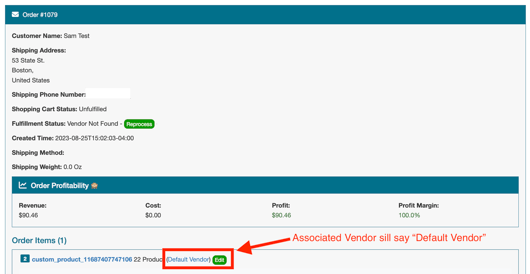
Identify the Product: Navigate to the Orders page in Spark Shipping and locate the failed order. Identify the specific product causing the error.
-
Map the Product: Go to the product, click Edit, and assign it to the correct Vendor and SKU.
Detailed Guide: Single SKU Mapping
-
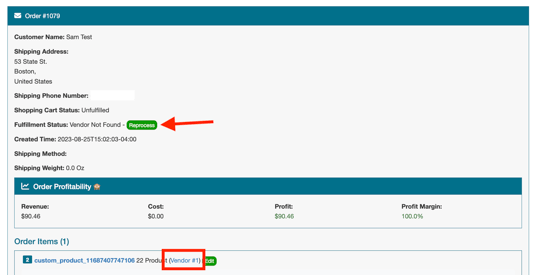
Reprocess the Order: Once mapped, return to the order and confirm the associated vendor has updated as expected. You can then Reprocess the order. Spark Shipping will now successfully route the order to the newly assigned vendor.