
Understanding Price Tolerance in Spark Shipping
The tolerance setting controls how much a price can change before Spark Shipping asks for your sign-off. Changes within the threshold get applied automatically. Changes that exceed it get flagged for Manual Review.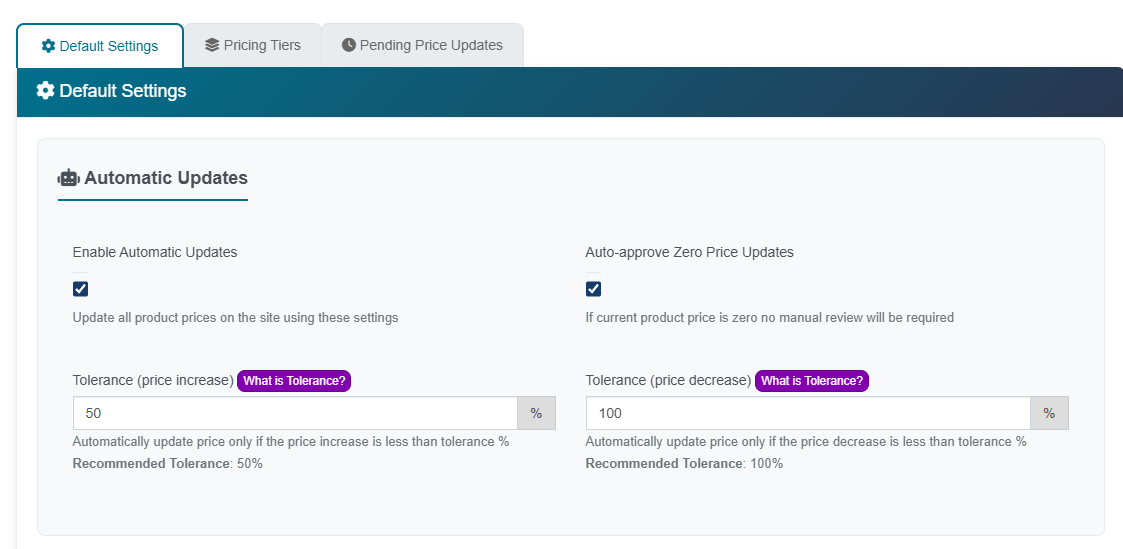
There are two thresholds, and they work independently:
Tolerance (price increase) — how much a price can go up automatically before it needs your approval.
Tolerance (price decrease) — how much a price can drop automatically before it needs your approval.
Because they're separate, you can allow price drops to go through freely while keeping a tighter limit on increases — or flip it around depending on how your business works.
What happens when a change exceeds the tolerance?
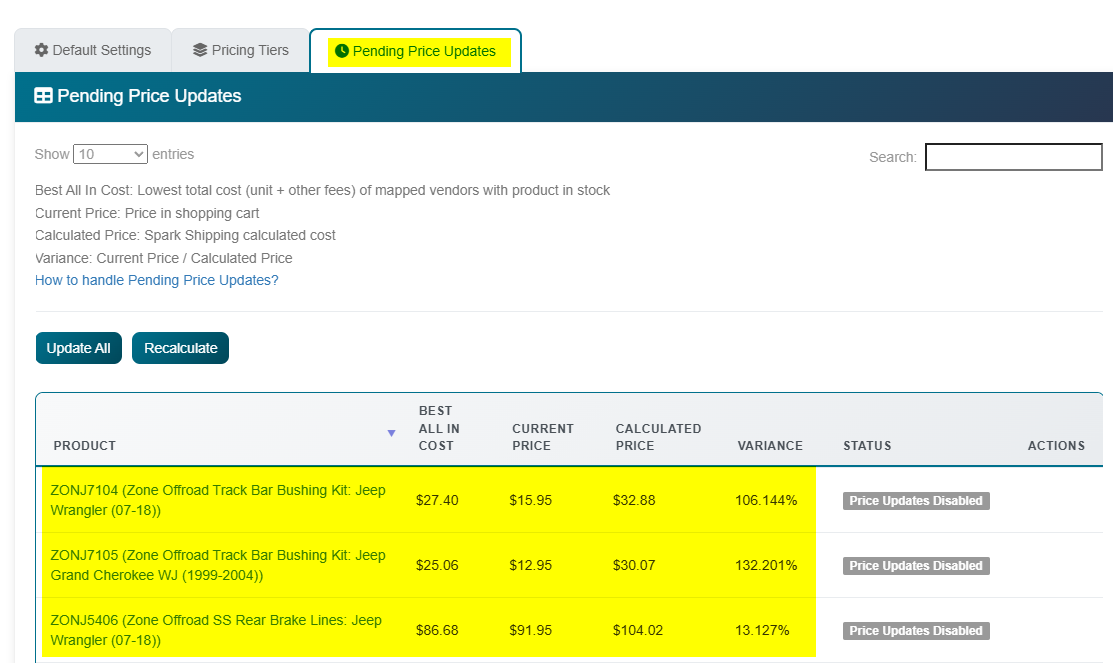
The product moves to Manual Review Required. You'll find it under Automation > Price Automation > Pending Price Updates, where you can approve the change, skip it, or go back and adjust your pricing settings before recalculating.
What tolerance should I start with?
New sites — Set both to 50% or higher. You're still dialing in your pricing setup, and getting flagged for every small change isn't helpful at this stage. A high tolerance lets Spark Shipping handle updates automatically while you get things configured.
Existing sites with live orders — Go slow. Start both tolerances at 2% and save. A pricing pass will kick off in the background — give it a couple of hours. When it's done, check whether the suggested prices look right. If something's off, adjust your pricing settings and recalculate. If everything looks good, bump the tolerance to 5% and run another pass. Keep going until your catalog is priced the way you want it.
MAP pricing
If you always want products priced at MAP regardless of how large the change is, enable the Ignore Tolerance for MAP toggle. This skips the tolerance check entirely for any product where MAP applies.